Originally Posted: June 4, 2019 Updated: October 19, 2025
Escaping a Toxic Job: How Financial Independence Fueled My Journey to Part-Time Freedom
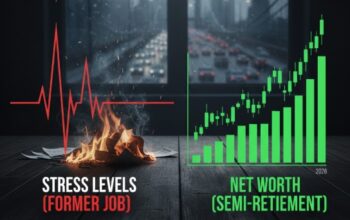
Six years ago, at 45, I was trapped in a soul-crushing job that left me feeling 65. After 25 years of grueling shifts, micromanagement, and endless emails, I found my escape through financial independence. Now, at 51, I’ve transitioned to part-time work, drawing on my Freedom Fund to bridge gaps until I can access my 401k penalty-free at 55 via the Rule of 55. This 1500-word guide shares my updated journey, the strategy that got me here, and actionable steps to help you break free from a toxic workplace through personal finance. With real lessons, expert tips, and authoritative resources, this could be your roadmap to early retirement.
My 25-Year Descent into Workplace Hell
At 20, I started a job to pay for college, thinking it was temporary. I’d quit, get a degree, and land a “real” career. But life had other plans. By 45, I’d spent 25 years in a role I never chose, feeling drained and resentful. A 2023 Gallup study found 60% of workers feel emotionally detached, with 19% in active misery Gallup Workplace Report. I was in that 19%, and it was killing me.
That’s why I created earlyretirementearl.com—to share the lessons I learned the hard way and help others avoid the same trap. Six years later, at 51, I’m living proof that financial independence can free you from a job that’s stealing your life.
Why My Job Was Killing Me: 15 Reasons I Had to Break Free
Here’s what pushed me to my breaking point at 45. If these resonate, it’s time to plan your exit:
- Relentless 12-Hour Days: Endless shifts were routine, leaving me exhausted and with no time for myself.
- 90-Minute Commutes: Three hours daily—90 minutes each way—stole precious hours. I’d leave at 4 AM and return at 8 PM.
- Non-Stop Emails: My phone buzzed constantly, even on days off, with redundant requests or passive-aggressive notes.
- Phone Calls on Days Off: Trivial questions disrupted my rare downtime, as colleagues took the easy way out.
- 24-Hour Shifts: My first 24-hour shift was a novelty; later ones left me cramped and angry.
- Stuck During Emergencies: During the 2003 Northeast blackout, I was trapped at work for 19 hours, unable to leave. Superstorm Sandy: Stuck at work. 2 feet of snow: “You’re still coming in right?”
- Middle-of-the-Night Calls: As a team leader, I was yanked from sleep for emergencies. I even came home from a wedding once to 15 missed calls.
- Working Holidays: Missing Thanksgiving or Christmas for work while others celebrated was soul-crushing.
- Micromanagement: Every decision was questioned, making me feel like a robot, not a person.
- Constant Negative Feedback: Nothing was good enough, even when I clearly outperformed peers—too slow, too sloppy, always falling short.
- Unrealistic Expectations: Starting with 50 emails, growing to 200 by day’s end, guaranteed failure alongside my regular duties.
- Responsibility for Others’ Failures: As a leader, I was accountable for my team’s shortcomings, doubling the pressure.
- No Room for Creativity: My job’s creative spark was crushed by rigid rules and compliance demands.
- Demoralizing Policies: Programs like FMLA were abused, overburdening hardworking staff like me.
- Vacation Disruptions: Five weeks of vacation were generous, but guilt, rescheduling, or work interruptions made them pointless.
These weren’t just annoyances—they triggered anxiety, depression, and physical symptoms like nausea and dizziness. By 45, I was checked out, going through the motions, desperate for freedom.
Why Financial Independence Was My Only Escape
Switching jobs wasn’t the answer—a new role would likely mean less pay and similar misery, delaying my escape. Financial independence—having enough savings to quit forever—was the only way out. The FIRE movement defines this as saving 25-30 times your annual expenses (e.g., $1M-$1.5M for $40,000/year).
My breaking point came when work consumed my thoughts, even on days off. I’d lie awake, stressed about emails or emergencies, unable to be present with my family. When physical symptoms—dizziness, nausea, diarrhea—hit, I knew I had to act. By 51, I’d made enough progress to go part-time, using my Freedom Fund to supplement income until I can tap my 401k at 55.
How I Escaped: The Freedom Fund and Rule of 55 Strategy
At 45, I devised the Freedom Fund, a liquid savings pool to bridge the gap until 401k withdrawals at 59½. By 51, this strategy let me cut back to part-time work, with plans to retire fully at 55 using the Rule of 55. Here’s how it worked:
- Assessed My 401k: At 45, my 401k was substantial enough to grow through compound interest to cover retirement by 59½. For example, a $1M balance at 45 could reach $2M by 59½ at a 7% annual return Bankrate Compound Interest Calculator.
- Slashed 401k Contributions: I reduced contributions to the minimum for my employer’s match (e.g., 4%), freeing up cash.
- Built the Freedom Fund: I redirected those funds, plus savings from cutting expenses (e.g., dining out, subscriptions), into a taxable brokerage account with low-cost index funds like Vanguard VTSAX.
- Used the 4% Rule: I calculated my Freedom Fund needs with the 4% rule. For $40,000/year expenses, I needed ~$440,000 to cover 11 years (age 48 to 59½). By 51, I had enough to draw down part-time income gaps.
- Planned for the Rule of 55: At 55, I’ll leave my job and access my current employer’s 401k penalty-free, supplementing my Freedom Fund Fidelity Rule of 55.
- Covered Healthcare: I budgeted for private insurance via the ACA Marketplace until Medicare at 65.
By 51, my Freedom Fund lets me work part-time, covering income gaps while my 401k grows. At 55, the Rule of 55 will let me retire fully, penalty-free. Read my full 401k guide for details on optimizing this plan.
The 401k’s Role in Early Retirement
The 401k is a cornerstone of retirement planning, but its restrictions challenge early retirement. Here’s how to navigate it, based on my experience:
- Basics: Contribute pre-tax dollars, grow investments tax-deferred, and often get an employer match. Withdrawals before 59½ incur a 10% penalty plus taxes IRS 401k Overview.
- Early Cash-Out Risks: Cashing out early means penalties and taxes. A $50,000 withdrawal at 51 costs ~$17,000 (10% penalty + 24% taxes).
- Loans: Borrow up to $50,000 or 50% of your vested balance, repaying within 5 years. If you leave your job, repay within 60 days or face penalties Fidelity 401k Loans.
- Hardship Withdrawals: Allowed for needs like medical debt over 7.5% of income, but you’ll owe taxes and pause contributions for 6 months IRS Hardship Rules.
- Rule of 55: Leave your job between 55 and 59½ to withdraw from that employer’s 401k penalty-free, paying only income taxes.
- RMDs: At 70½, Required Minimum Distributions kick in, or you face a 50% tax penalty IRS RMD FAQs.
My Freedom Fund avoided penalties by minimizing 401k contributions while capturing the match. The Rule of 55 will seal my full retirement at 55.
Lessons from 25 Years of Workplace Misery
Here’s what I learned, and how you can apply it:
- Start Early: I regret not saving more in my 20s. A $500/month 401k contribution from age 25 at 7% could grow to $1M by 55 Bankrate Calculator.
- Diversify Savings: My Freedom Fund in a taxable account gave flexibility. A Roth IRA allows penalty-free contribution withdrawals.
- Cut Expenses: Trimming $200/month added $2,400/year to my Freedom Fund, enabling part-time work.
- Address Burnout: A 2024 SHRM study found 44% of workers face burnout SHRM Burnout Report. Recognize anxiety or physical symptoms and act.
- Plan with Experts: A financial advisor can tailor your FIRE plan. Use FIRECalc to test your savings.
Risks to Consider
- Market Volatility: Taxable Freedom Fund accounts face market swings. Keep 1-2 years of expenses in cash.
- Tax Trade-Offs: Lower 401k contributions raise taxable income. Check your bracket with TurboTax.
- Healthcare Costs: Private insurance can cost $15,000/year for a family KFF Healthcare Costs.
- Longevity Risk: A 40-year retirement risks outliving savings. Use a 3-3.5% withdrawal rate.
The Moral of My Story
My 25 years in a toxic job taught me financial independence is the only escape. At 51, I’m part-time, living off my Freedom Fund, and eyeing full retirement at 55 with the Rule of 55. If your job’s killing you—12-hour shifts, micromanagement, or endless emails—start now. Build a 401k, create a Freedom Fund, and take control. Visit earlyretirementearl.com for my 401k strategy and compound interest tips. Your freedom’s worth it.
Best of Luck
Earl

He didn't just save his way to freedom; he built a compounding engine. By combining "Bogleheads" index investing with a conservative options strategy, Earl turned a late start into a total victory. He’s not just talking theory—he’s living the math. Last year alone, Earl generated $78k in options premiums via the "Wheel" strategy and ~$400/month in passive dividends, proving that liquidity is the true key to quitting early.
Launched in 2019, EarlyRetirementEarl.com is a no-BS zone for dads and late-starters who want actionable, battle-tested steps to freedom. Featured on ThinkSaveRetire and Camp Fire Finance, Earl’s mission is to share the financial literacy he was never taught in school. No fluff, no gurus—just the math.
Not financial advice. I’m not a CFP or licensed advisor. All numbers are historical; markets fluctuate. Past performance is not indicative of future results. Do your own research and consult a professional.