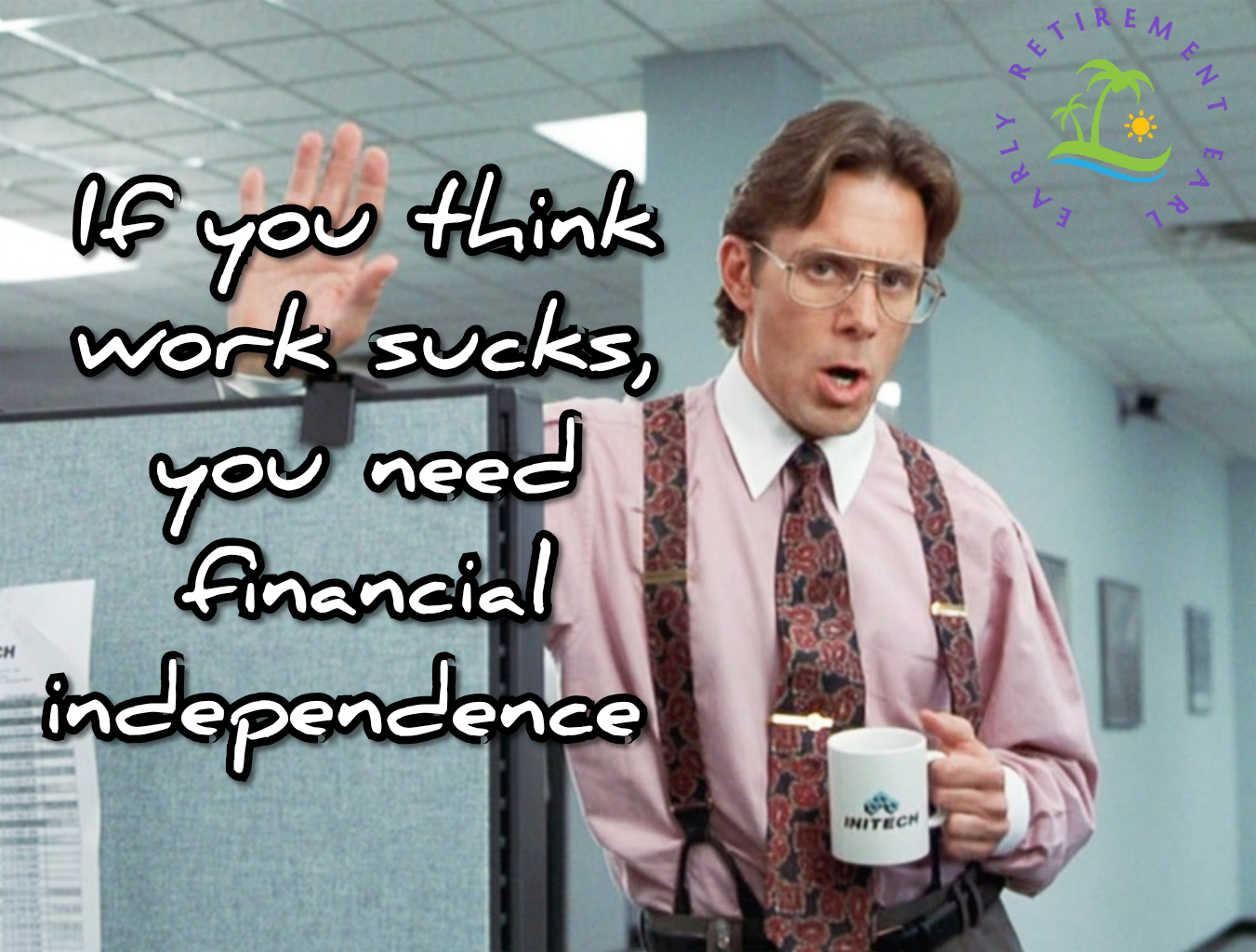
A Field Guide to Spot the Rot and Build Your Lifeboat Before the Ship Sinks
My love letter to Corporate America.
Welcome to the Succession Void.
It doesn’t show up in earnings calls or HR dashboards. VPs are currently too busy high-fiving over “payroll efficiencies” to see it. But it’s real—spreading like dry rot below the waterline.
It begins as a quiet sense of invisibility. It grows into the realization that the people at the helm of the ship don’t understand the engines. It ends when nobody left on board remembers where the life jackets are.
To understand the rot, we have to drop the HR euphemisms and name the disease.
The Vocabulary of the Sway
- Succession Void (noun): The operational black hole left when experienced leaders exit faster than their hard-earned knowledge can be transferred. The unwritten rules, historical context, and “what-to-do-when-the-process-fails” expertise vanish.
- Salary Compression (the spark): When the pay gap between a 30-year veteran and a fresh hire shrinks to almost nothing. It’s an invisible tax on loyalty that tells long-timers their experience is worth pennies on the dollar.
- Normalizing of Deviance (the infection): The slow slide where risky shortcuts or lowered standards become “just how we do things” because nothing catastrophic has happened… yet.
The Anatomy of the Insult: Loyalty as a Sucker Bet
Imagine spending 32 years learning where the bodies are buried, how to keep systems running through crises, and how to wrangle impossible personalities. Then you spot the job posting for your “junior” counterpart. Their starting salary is within spitting distance of yours—sometimes higher, thanks to market adjustments that outpace internal predetermined percentage raises.
When your 30 years of sacrifice nets you just a few bucks more a week than a stranger on day one, the math hits hard. Loyalty stops looking like a virtue. It starts looking like a tax. This is salary compression and this is where the Brain Drain begins. Veterans leave, and they take the institutional immune system with them.
The O-Ring of Corporate America: Into the Void
In 1986, the Space Shuttle Challenger exploded because a small O-ring failed. Over time, launches, despite known risks, became acceptable. This accepted behavior had become the norm. Management had normalized the deviance—they treated the fact that they have had no disaster yet as proof of safety. In the face of engineers’ warnings, they decided to launch anyway in order to maintain their schedule.
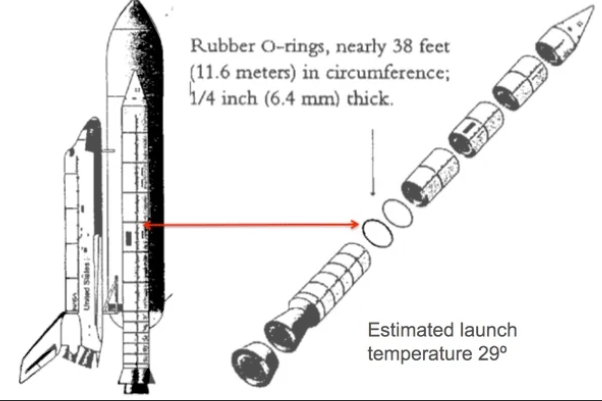
We see this today in the “Succession Void.” As you witness daily the widening boundaries of acceptable behavior, Execs convince themselves that processes and manuals can replace people. They think they can plug any warm body into a veteran’s role. They are wrong.
Processes work when everything goes smoothly. Veterans know what to do when it doesn’t.
We’re watching that same logic play out in real time.
If you want to see the Succession Void in the wild, look no further than Boeing.
- Loss of experienced engineers who understood the full system—not just their piece of it
- Outsourcing and fragmentation of critical institutional knowledge
- Leadership prioritizing cost, speed, and schedule over engineering judgment
- A growing reliance on process and documentation to replace lived experience
The result?
Repeated quality issues. Safety failures. A pattern, not an anomaly. This isn’t a one-off failure. This is the Succession Void—fully matured. This isn’t bad luck. It’s a decision.
What a Healthy Company Actually Looks Like
Let’s be clear—this isn’t inevitable.
Well-run organizations don’t suffer from a Succession Void because they treat experience like an asset, not a rounding error.
In a healthy company:
- Experience is visibly valued. A 30-year veteran isn’t making “close enough” to a new hire. Pay reflects scar tissue, not just market rates.
- Knowledge transfer is intentional. Mentorship isn’t lip service—it’s structured, protected, and rewarded. The playbook lives in people and gets passed on.
- Veterans are leveraged, not replaced. When things break—and they always do—the organization turns to the people who’ve seen it before.
- Process supports judgment. Documentation exists, but it doesn’t pretend to replace experience. It’s a tool, not a crutch.
- Shortcuts are challenged, not normalized. Speed matters, but not at the expense of standards. Deviance doesn’t get a chance to become culture.
These companies don’t run “lean.” They run resilient.
They don’t celebrate payroll cuts that hollow out capability. They invest in the people who keep the system from collapsing when the unexpected hits.
That’s the difference between an organization that bends—and one that breaks.
If your company isn’t doing these things, you are the only one responsible for your financial resilience. You need to build your own safety net, which is exactly why I built [The Financial Freedom Compass]—to help you bridge the gap between ‘corporate dependent’ and ‘financially free’.
The Rot: Why the Best People Leave First
The Succession Void doesn’t just happen because people retire; it happens because the high-performers get tired of being the only adults in the room.
When Salary Compression hits, it does more than shrink your paycheck—it destroys the “Competency Hierarchy.” In a healthy organization, experience is a shield. Issues arise and experienced veterans are turned to immediately to jump in and put out the fire. In a Void-stricken company, when a problem arises, procedures are abandoned and new solutions are created as unskilled employees fumble their way through. They may solve the problem faster—or cheaper—but the cost comes later. Over time they are rewarded and continued until taking shortcuts becomes normal behavior and time-tested solutions are pushed aside in place of lower quality but faster and cheaper results. This is the rot setting in.
Watching the Incompetence Tax
There is a specific kind of exhaustion that comes from watching a new hire—paid 98% of your salary—stumble through a task you could do in your sleep. It’s worse when their incompetence creates more work for you.
- You’re the one fixing their billing errors.
- You’re the one calming down the vendor or customer they insulted.
- You’re the one staying late because they didn’t know the unwritten rule about the Friday shipment.
- You’re the one fixing the costly mistake before it happens and not even being recognized for it.
Management calls this mentorship. You call it an Incompetence Tax. When the veteran realizes they are effectively being paid the same as the person they are constantly saving, the resentment starts to rot the foundation.
That’s not development. That’s dependency.
The Exit of the Fixers
The Fixers—the 30-year vets who keep the lights on—don’t usually leave because the work is too hard. They leave because the work has become senseless.
When you watch a spreadsheet manager reward a brand-new hire’s mediocrity with a market-rate salary while denying your merit increase, the message is received loud and clear: Your competence is a commodity, but your silence is required.
The high-performers are always the first to board the lifeboats. They have the skills to leave. What remains is a hollowed-out staff: a few frustrated veterans waiting for their opportunity to exit, and a sea of new hires who don’t know that the ship is already taking on water.
The Real Cost of Efficiency
Replacing one employee can average over $45,000, and for leadership positions, it can cost up to 200% of the annual salary. When a 30-year veteran walks out the door because of a $5,000 salary compression gap, the payroll savings the VP is celebrating are actually a massive net loss. They aren’t saving money; they are liquidating their company’s most valuable asset: Knowledge.
Any Port in a Storm
To the execs still celebrating quarterly payroll wins: The Succession Void isn’t incoming. It’s here. You’ve normalized the decay until decay became your operating model.
You’ll blame the economy, the labor market, or “the ocean.” But the ocean didn’t sink the ship. You did.
As for me? I’ll be in the lifeboat, watching the sway, counting down the days until January 1, 2028.
Enjoy the swim.
AFTERWORD:
2026 Outlook: The Void Widens in Plain Sight – A Message in a Bottle
The Succession Void isn’t some distant iceberg anymore. As of March 2026, it’s crashing through the hull while the band plays on. The data is screaming what your corporate dashboards are still trying to whisper: stability is an illusion, and the rot is accelerating.
The Compression Reality: Look at the numbers. Merit increases are frozen at 2–3%, and total salary budgets are flat, if not less than 2025—a deliberate choice by boards playing it cautious in a shifting market. (Remember, if you are forced to work harder due to payroll cuts, that is a budgeting choice by corporate, not a thin talent pool.) Meanwhile, promotions have dropped to roughly 9% of the workforce, with the associated pay bumps shrinking. Veterans are watching new hires close the gap via market adjustments while their own 30 years of loyalty gets a 3% pat on the head. In 2026, compression isn’t a bug; it’s the business model.
The Job Hugging Trap: Voluntary turnover has cratered, with quits hovering around 2%—multi-year lows. On paper, HR is high-fiving over retention gold. In reality, it’s fool’s gold. Over half the workforce (57%) admits to “Job Hugging”—clinging to roles out of fear rather than fire. Knowledge isn’t transferring; it’s just sitting there, aging in place, waiting for the retirement tsunami or the moment someone finally snaps.
The AI Wildcard: Then there’s the AI accelerant. Leaders are cheering as agents automate routine tasks, convinced they’ve bottled wisdom in a prompt. Bullshit. AI ingests codified data, not the tacit judgment forged in the fires of a 30-year career. It doesn’t know the “why we don’t do it that way anymore,” the crisis improvisation, or the cultural landmines only a veteran spots. When you over-rely on the machine and flush the “human immune system” (the veterans), you normalize deviance at lightspeed. You aren’t becoming “tech-forward”; you’re becoming lobotomized.
Message in a Bottle
To Corporate Leaders:
Fix this before the ship tips. Stop celebrating payroll efficiencies that liquidate your institutional memory. Reward real knowledge transfer—Legacy Bonuses, protected mentorship time, and meaningful pay differentiation for tenure. If you continue to ignore the Void, your quarterly wins today are simply financing tomorrow’s catastrophe. Wake up or watch the ship sink.
To the People in the Trenches:
Armor yourself. This isn’t about loyalty anymore; it’s about self-preservation.
- Document your value: Build your own portable knowledge vault.
- Stop Being the Hero: If the system ignores your experience, stop compensating for its structural stupidity. Let the Void show its teeth.
- Work your wage: Give the system exactly what it pays for—no heroic freebies for a company that treats your scars like a line-item expense.
- Audit your Freedom Ledger: Every hour fretting over the company’s future is an hour stolen from yours. Your loyalty belongs to your family and your exit plan, not an organization that treats your legacy like a line-item expense.
The lifeboat is launching. My horizon is January 1, 2028. Make yours sooner if the sway gets worse. The bottle is floating—someone with ears to hear will act. The rest?
They’ll just blame the storm.
Ready to fast-track your freedom? I built my $2M net worth using these two core systems. Stop guessing and start building:
- The Financial Freedom Compass: A free, 48-lesson course to bridge your financial literacy gap.
- My FIRE Toolkit: The exact calculators and tracking sheets I used to hit my 2028 goals.
- Check out my full story here to see the year-by-year math behind the results.
If this resonates, subscribe to the mailing list and follow my documented real time escape.
Frequently Asked Questions
The Succession Void is the operational vacuum created when experienced employees leave faster than organizations can transfer their institutional knowledge. When long-tenured workers retire, quit, or disengage without training successors, the unwritten rules that keep systems running disappear. Processes and manuals remain, but the judgment built from decades of experience leaves with the people who held it.
The biggest driver is salary compression. When new hires are brought in near the pay level of long-time employees, the financial incentive to stay disappears. Over time, veterans conclude their loyalty isn’t being rewarded and leave for retirement, better jobs, or simply disengage. When enough experienced workers exit at once, organizations suddenly find themselves without institutional memory.
Source: Studies from organizations like Society for Human Resource Management and Deloitte regularly highlight knowledge loss and succession planning failures as growing workforce risks.
No. A skills gap means workers lack technical training. The Succession Void is different—it’s the loss of institutional knowledge. It’s the difference between knowing how a system is supposed to work and knowing how it actually behaves when something breaks.
Because it’s invisible on quarterly reports. Payroll costs show up immediately, but the loss of institutional knowledge happens slowly. By the time leaders notice operational breakdowns, the experienced workers who understood the system have already left.
Research on workplace turnover shows the cost of replacing employees can reach 50–200% of their annual salary, particularly for experienced roles.
Source: Center for American Progress workforce turnover studies.
Organizations entering a Succession Void often see rising errors, slower decision-making, failed audits, and operational instability. When experienced employees disappear, the organization loses its “immune system”—the people who know how to spot and fix problems before they become disasters.
If you’re in the trenches, the best protection is focusing on your own long-term independence. Maintain your skills, build financial flexibility, and avoid tying your identity to a company that treats experience like a line-item expense. Your loyalty belongs to your family and your exit plan—not to an organization drifting into a Succession Void.
Sources
- Average employee turnover replacement cost ($45,236 in 2026): Express Employment Professionals / Harris Poll Survey (January 2026) and related coverage on HR Dive.
- Replacement costs as 50–200% of salary (by role): Gallup and SHRM benchmarks, summarized in sources like Turnozo and Gallup workplace studies.
- Salary compression driving turnover and morale issues: Insights from Pearl Meyer surveys and analyses like WorldatWork on pay equity and retention impacts.
- Normalizing of deviance concept and Challenger O-ring example: Diane Vaughan, The Challenger Launch Decision: Risky Technology, Culture, and Deviance at NASA (University of Chicago Press): Book page.
- Boeing layoffs, knowledge loss, and ongoing quality/safety issues: Coverage including Seattle Times on workforce changes (2025–2026 data), Aerotime on defense cuts, and NYT on quality-control efforts post-crises.

He didn't just save his way to freedom; he built a compounding engine. By combining "Bogleheads" index investing with a conservative options strategy, Earl turned a late start into a total victory. He’s not just talking theory—he’s living the math. Last year alone, Earl generated $78k in options premiums via the "Wheel" strategy and ~$400/month in passive dividends, proving that liquidity is the true key to quitting early.
Launched in 2019, EarlyRetirementEarl.com is a no-BS zone for dads and late-starters who want actionable, battle-tested steps to freedom. Featured on ThinkSaveRetire, ESI Money, Budgets are Sexy, and Camp Fire Finance, Earl’s mission is to share the financial literacy he was never taught in school. No fluff, no gurus—just the math.
Not financial advice. I’m not a CFP or licensed advisor. All numbers are historical; markets fluctuate. Past performance is not indicative of future results. Do your own research and consult a professional.