November 2025
Debt sucks. I know—I’ve lived it.
You’re here because you’re doing the work, trying to finally dig yourself out of the financial hole. Maybe you just paid off the car, or maybe you got that small bonus. But now you’re paralyzed by the single most stressful decision standing between you and freedom: Should I put that extra $500 toward my 22% credit card, or should I stop delaying and finally open that Roth IRA?
For years, this choice was the single biggest stress in my life, worse than dealing with the $800 rent on my $10/hour grocery store job. At one point I was $10,000 in debt, pushing grocery carts, and eating Pop Tarts just to make ends meet. I wasted many years feeling clueless, paralyzed by the fear of making the wrong financial move. I didn’t have an education; I had grit, but I lacked the math.
I clawed my way to a $2M net worth by 50, and I did it by finally cracking the code on this exact dilemma. I realized the experts were giving incomplete advice. The goal isn’t just to save money or just to invest—the goal is to do both in the correct order to maximize your total net worth boost.
The definitive, battle-tested truth is this: You can’t out-invest a 22% credit card. That high-interest debt is a guaranteed loss that must be eliminated before you can seriously pursue FIRE (Financial Independence, Retire Early).
I built the Debt Destroyer Calculator to prove it. This tool is the only one that models both the debt payoff and the reinvestment phase on the exact same timeline. It gives you one final number: Your total lifetime wealth boost.
🔥 ACTION: See The Verdict Right Now
Don’t read another word until you plug your numbers in below. See how fast that 22% debt dies, and how much money you’ll make once that old payment starts working for you, not against you.
This calculator will demonstrate the savings by adding a set amount extra to your minimum monthly payments consistently over time.
Input your numbers in the yellow boxes
Current Scenario & Minimum Payment Payoff
With Minimum Monthly Payments it will take:
It Will Take 0 MONTHS to pay off your Debt
This will cost you $0.00 In Interest payments alone
Increased Payment Scenario & Savings
Phase 2: What happens when you redirect that payment to investing?
After you kill the debt, your $245.83/mo now becomes rocket fuel.
1. The Weight of High-Interest Debt: The Enemy
A few years ago, I wrote about how consolidation nearly bit me hard. I learned that banks profit from complexity and by stretching out your payments. That’s what minimum payments are—a trap designed to keep you leveraged forever. You think you’re managing the debt, but you’re really paying a crushing fee for the privilege of staying stuck.
A 22% credit card isn’t just an inconvenience; it is a guaranteed negative 22% return on your money. Think about that. You’d never invest $1,000 if someone guaranteed you’d lose $220, right? Yet every month, that’s what high-interest debt does to your budget.
This guaranteed loss must be overcome by any potential investment gain. If the stock market’s historical average is 7% (and it’s never guaranteed), you are actively losing 15% every single day your debt survives. That’s a fool’s bet. Vanguard: S&P 500 average real return ~7% (1926–2024)
The Shocking Output: Paying the Minimum
To understand the enemy, let’s look at a typical scenario, one I see constantly from people who are just starting their FIRE journey. This was me, staring at my bills with dread, not realizing the depth of the hole I was in.
| Debt Detail | Minimum Payment Trap |
| Balance: $10,000 | APR: 22% |
| Minimum Payment: $283 | Time to Pay Off: 58 Months |
If you plug those numbers into the calculator and only pay the minimum:
- Total Interest Paid: $6,243
- Total Money Paid: $16,243
That $6,243 loss wasn’t just money; it was almost 5 years of your life wasted, handing your paycheck straight to the bank. I almost lost my condo to foreclosure when I was clueless at first. If I had truly seen this math, I would have dropped the excuses instantly. You have to face the math.
2. Your Battle Plan: Stop the Bleeding
If that $6,243 loss in guaranteed interest didn’t scare you, nothing will. Now, let’s talk about the only way to beat a 22% APR: The Debt Avalanche Method.
🚨 The Law: Attack the Highest-Rate Debt First (Debt Avalanche)
Forget the ‘Debt Snowball’ for now. I respect the psychological win of clearing a small balance, but I’m here to save you thousands of dollars, not just give you a good feeling. The mathematically superior move is the Debt Avalanche.
The Avalanche means you pay the minimum on every single debt except the one with the highest interest rate. You throw every single extra dollar you can find—that tax refund, the side hustle cash, the money you saved skipping Starbucks—straight at the principal of that 22% card. You keep doing this until the balance hits zero. Then, and only then, do you take the full payment you were making and roll it onto the next highest-rate debt.
My motto is simple: Debt sucks, but guaranteed returns are better. That extra payment is not an expense; it is a guaranteed 22% return on your investment. You won’t find a better, safer, or faster return anywhere else on earth.
Calculator Proof: The Power of $250/Month
Let’s run the numbers again. The calculator showed us that $10,000 debt at 22% APR would take nearly 5 years paying the $283 minimum.
Now, let’s commit to finding just $50 extra per month, bringing your total payment to $333.
| Metric | Minimum Payment ($283) | Avalanche Payment ($333) | The Net-Worth Win |
| Years to Pay Off | 5 years | 3.6 years | 1.4 years of life saved |
| Total Interest Paid | $6,243 | $4,643 | $1,600 saved (Guaranteed) |
By committing just $50—about $1.60 a day—you just guaranteed yourself $1,600 in interest savings and freed up a year and a half of your life.
Where to Find the Extra Cash? The Frugal Battleground
When I was earning just $10/hr, every dollar was a decision. I had no savings, so I had to manufacture cash flow. You can, too. Your budget is the battleground, and here’s where you start cutting the fat:
1. Cut the Subscriptions!
In 2025, people bleed money from sneaky subscriptions. I’m talking about the $15 streaming service you don’t watch, the $10 magazine you don’t read, and the gym membership you forgot to cancel. I cancelled cable and saved nearly $200 a month and redirected the cash to my credit card. It was painful for 5 minutes, and then I forgot about it.
- Action: Audit your bank statements for the last three months. Use a free tool like Rocket Money or just grab a highlighter and look for recurring charges. If you can’t recite the exact value it adds to your life, cut it. Just one $15 Netflix and $35 gym membership instantly gives you $50 a month for your Avalanche. That alone hits your goal! This is low-hanging fruit—pick it before you do anything else.
2. The Pop Tart Budget (Cook Cheap)
When I was young, I survived on Pop Tarts to save cash. It wasn’t fun, but it worked. Today, you don’t have to live off processed sugar, but you do have to master cheap, bulk cooking. This is a game-changer.
- Americans spend thousands a year dining out. In 2024, the average U.S. household spent $3,639 on food away from home. BLS Consumer Expenditure Survey 2024
- A $15 restaurant burger costs $5 to make at home. By packing leftovers and cooking large batches of cheap staples—rice, beans, pasta, and eggs—you can easily redirect another $100 to $200 per month toward your debt. Every $40 takeout order you skip is $40 you throw at your high-interest card. That’s a guaranteed 22% return on a $40 expense that you’ve eliminated.
- Pro Tip: Stop justifying lunch out as a “necessity.” Pack it. Every day. No excuses.
3. Sell Your Stuff & Flip Others’
You have a gold mine in your closet, garage, and attic. Your clutter is the bank’s principal payment. This is where you find the large, lump-sum payments that really accelerate the Avalanche.
- I made $600 selling old electronics and comic books on eBay in one month and put every penny straight toward my credit card. That $600 one-time payment is the equivalent of paying the extra $50 for a full year. That’s how you gain velocity.
- If you’ve sold your own stuff, start flipping. Grab free items from Craigslist or Nextdoor (old furniture, tools, toys) and resell them for a profit. A $0 chair sold for $50 is pure profit—and a guaranteed 22% rate of return on your debt. This isn’t a long-term strategy, but it’s a six-month sprint that can chop years off your debt burden.
4. The Side Hustle Boost: Trading Time for Freedom
If you’ve cut every expense and still need more velocity, it’s time to make more money. Even a small side hustle can obliterate a debt balance.
- The Math: Just 10 hours a week driving for a delivery app or freelancing on a site like Upwork at $20/hour adds $800 a month to your payments.
- The Trade-Off: I know it sucks to give up your weekends. I mowed lawns and worked odd jobs for a whole summer to clear my first $3,000 loan. It was brutal, but I got the $3,000 back, plus I saved the interest. That short-term sacrifice bought me decades of freedom later on. Don’t look at it as working extra; look at it as buying back your time from the bank.
The Commitment
The calculator proved that eliminating high-interest debt is the single most financially rewarding action you can take right now. It is your first, best, and most guaranteed return. You need to make some sacrifices and commit to adjusting your lifestyle in order to make it work. If you would like some more creative ideas on how you can cut spending, check out my 10 Insanely Easy Ways to Cut Spending
3. The True Wealth Secret: The Reinvestment Pledge
If you closed the calculator right after killing the debt, you missed the entire point of the exercise. Debt payoff is only the first step. The second step is non-negotiable—it’s the reason I went from clueless at 19 to a multi-millionaire dad by 50.
The true secret to Financial Independence is this: The moment you pay off that high-interest debt, you treat that old debt payment like a mandatory investment.
This is the power of our dual-action calculator. It doesn’t stop when your balance hits zero; it instantly models the second phase: The Wealth-Building Phase. You don’t just eliminate the negative—you force your money to start generating the positive.
The Investment Cliff: Redirecting the Payment
In our example, you went from paying $283 (minimum) to paying $333 ($50 extra effort) for 3.6 years to kill the debt.
The day your credit card balance hits $0, you do not—I repeat, DO NOT—reward yourself with a new car, a fancy vacation, or new streaming services. That is the definition of Lifestyle Creep, the wealth killer. I banked a $2k bonus instead of buying a new TV once; that discipline is what separates the FIRE winners from the perpetual minimum-payment-payers.
Instead, you simply take that entire $333 per month and automatically redirect it into a low-cost, diversified index fund, like VTSAX or VOO. This payment—the one you’re already used to making—now becomes the engine of your financial freedom.
The Power of Compound Interest vs. Compound Interest (Working Against You)
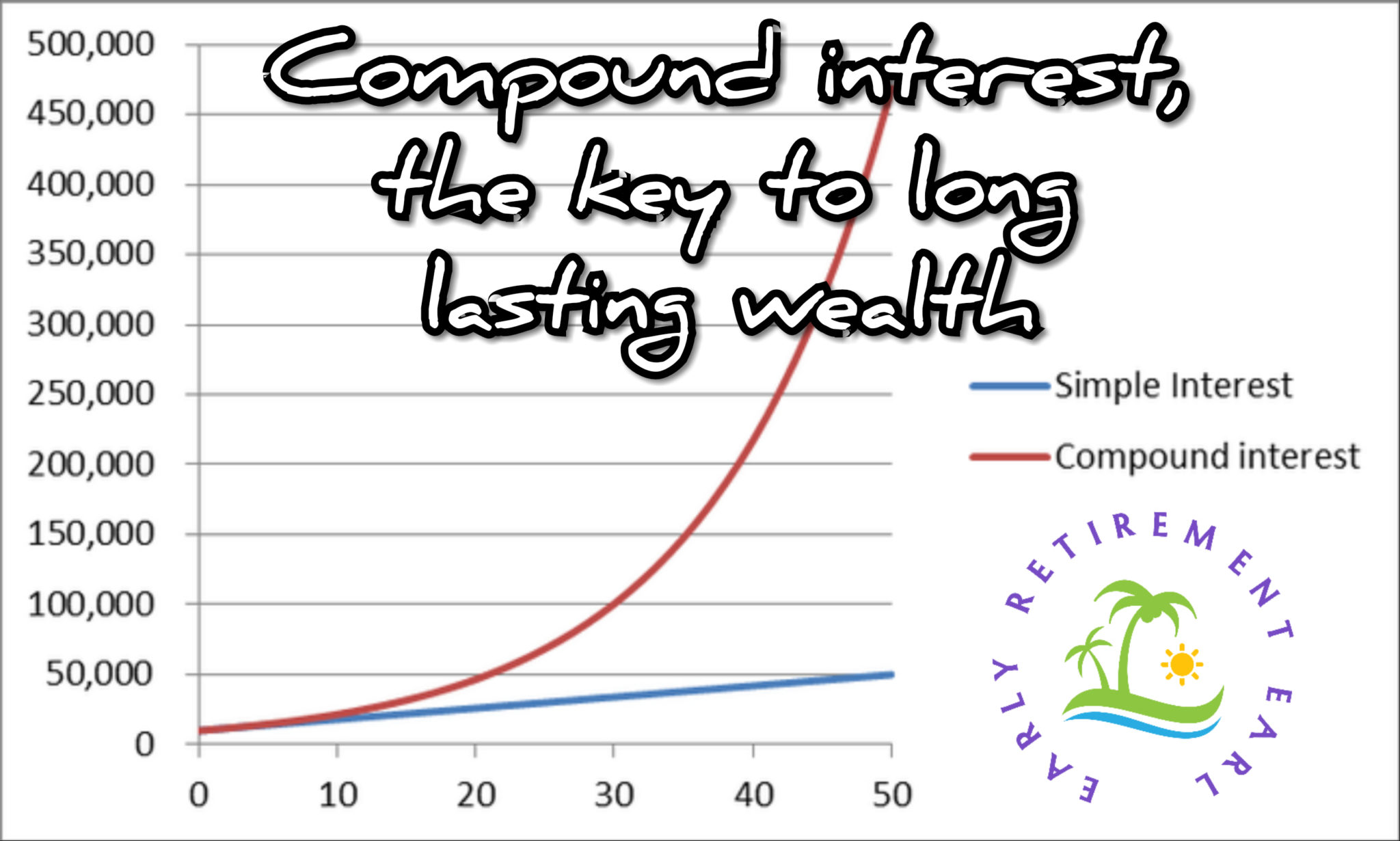
Look, your 22% credit card was using compound interest to destroy your wealth. That’s why the debt grew so fast and was so hard to kill. Now, we flip the script. By reinvesting the full $333 payment, you are forcing compound interest to work for you.
We started with a 5-year commitment to paying the bank $283 a month. By implementing the Debt Avalanche, you shaved off nearly 1.4 years of interest payments.
Now, we take those years and dedicate them to building wealth.
The Grand Finale: Exponential Wealth Creation
You’ve done the hard work. You’ve slashed your debt, saved on interest, and now it’s time to unleash the true power of your disciplined actions. This is where your money starts working for you, not against you.
Remember, your original plan would have had you paying on that credit card for almost 5 years (58 months), racking up over $6,200 in interest. But by committing an extra $50/month and accelerating your payoff, you’ve killed that debt in just 3.6 years (44 months).
This means you have 1.4 years (16 months) of time left in that original 5-year window. Instead of paying the bank, your $333/month payment now becomes rocket fuel for your investments.
By immediately redirecting that $333/month into a low-cost, diversified index fund, where it can grow at a conservative 7% market rate, here’s what happens in those crucial 1.4 years:
Phase 2: The Wealth Building Advantage
- Monthly Investment: $333
- Years to Invest: 1.4 years (16 months)
- Expected Growth Rate: 7% (The historical average of a simple S&P 500 fund)
- Total Investment Value Generated: $5,800}
That $5,800 is pure profit from redirecting your payments, turning a past burden into future wealth.
Your Total Net-Worth Boost: $7,400!
When you combine your strategic debt payoff with this immediate reinvestment, the total financial impact is undeniable:
| Metric | Result | Impact |
| A. Interest Payments Avoided | $1,600 | Guaranteed savings from accelerated payoff |
| B. New Wealth Generated | $5,800 | Passive growth from redirected payments |
| TOTAL NET-WORTH BOOST | $7,400 | Your direct financial gain within the original 5-year timeframe |
This $7,400 net-worth boost is the guaranteed result of making the right decision (debt first) and sticking to the reinvestment pledge within your original commitment window.
To truly grasp the power, consider the total financial swing: On top of already being $10,000 in debt, you avoided a $6,243 guaranteed loss from paying minimums and, in its place, created $5,800 in new wealth. That’s a total financial swing of over $15,000 in your favor! You went from Negative $10,000 to $5,800—all because you made the right decision (debt first) and stuck to the reinvestment pledge. That’s the exact strategy that fueled my transition from broke to Barista FIRE. No crypto gamble, no inheritance, no side-hustle empire—just math and discipline.

4. Addressing Common Objections: What About the 401(k) Match?
I know what some of you are thinking. “But Earl, my HR department says I need to get the full 401(k) match! I’m leaving free money on the table!”
This is the one exception to the rule, but it’s an exception that needs context.
The Power of the Match
A typical 401(k) match is a 100% return on your money up to a certain percentage (e.g., 3% of your salary).
- If you earn $50,000 and your company matches 100% up to 3%, that’s $1,500 of “free money” from your employer. A guaranteed 100% return is mathematically superior to eliminating a 22% guaranteed loss. IRS 2025 401(k) Contribution Limits
The Strategy: Split the Difference (The “Earl Hybrid”)
Here is the only strategy I endorse when high-interest debt and a 401(k) match exist simultaneously:
- Fund to the Match: Contribute only enough to your 401(k) to get the full company match (e.g., 3%). This locks in your 100% return.
- Redirect the Rest: Every single extra dollar—from the moment you hit the match level up to the full IRS limit—must be immediately redirected to the 22% debt.
- No More Investing: Once you get the match, stop. Do not fund your Roth IRA. Do not buy extra shares of VOO. Do not look at stocks. Your $1.60 daily commitment (from Section 2) must go to the Avalanche.
Once the debt is dead (and I mean completely dead), you return to your investing plan with force, redirecting the old debt payment plus the money you were putting toward the match, thus accelerating your investment portfolio exponentially.
You can’t do everything at once. You must prioritize the single most destructive force in your financial life: the 22% APR.
5. Your Next Move: Time to Quit the Guessing Game
The math is not emotional. The math is not subjective. The math doesn’t care if the debt feels unfair or if you “miss” having a little fun money.
If you are carrying high-interest consumer debt, the math is clear: Debt payoff is your best investment. You will not find a better, safer, or more guaranteed return anywhere in the market. You must kill the 22% guaranteed loss before chasing the 7% potential gain.
I’ve been there. I know the paralysis. I know the shame of checking that bank balance. But that shame is unnecessary. The only thing separating you from financial freedom is a lack of clear strategy and consistent action. This calculator gives you the strategy. Section 2 gave you the actions. Section 3 gave you the long-term payoff. Now you need the commitment.
This guide isn’t magic—it’s hard work, sacrifice, and discipline. But every step you take gets you closer.
Final Call-to-Action: Stop Tracking on Notebook Paper
The calculator proved the strategy, but you need a system to execute it. Getting debt-free is 90% psychology and 10% math, but that 10% of math has to be perfect. You need to know exactly how much interest you’re saving and when your debt will officially die so you can start that reinvestment countdown.
I want to give you the exact tool I used to map out my freedom.
I’ve compiled all the calculations from this post, plus a few extra features for tracking your payments, calculating your exact “Debt-Free Date,” and setting up automated savings goals, all into one comprehensive, multi-tab Google Sheet. It’s the ultimate tracker for killing debt and starting your investment journey.
Get Your Free FIRE Calculators NOW!
Click the button below to instantly create your own editable copy.
Get My FREE Copy Now!
Calculate how many years to FIRE, Debt Elimination and Re-Investing Calculator, Simple Savings Calculator, Withdrawal Calculator, and CoastFIRE Calculator
Stop guessing and start crushing your debt today.
I went from broke, eating Pop Tarts, and $10,000 in the hole, to part-time freedom at 51. You don’t need a Wall Street MBA. You just need the math and the discipline. Let’s crush this.
Happy saving!
— Earl
P.S. Share your first action in the comments—are you cutting cable, selling a gadget, or finally calling to negotiate your APR? I’m rooting for you.

He didn't just save his way to freedom; he built a compounding engine. By combining "Bogleheads" index investing with a conservative options strategy, Earl turned a late start into a total victory. He’s not just talking theory—he’s living the math. Last year alone, Earl generated $78k in options premiums via the "Wheel" strategy and ~$400/month in passive dividends, proving that liquidity is the true key to quitting early.
Launched in 2019, EarlyRetirementEarl.com is a no-BS zone for dads and late-starters who want actionable, battle-tested steps to freedom. Featured on ThinkSaveRetire, ESI Money, Budgets are Sexy, and Camp Fire Finance, Earl’s mission is to share the financial literacy he was never taught in school. No fluff, no gurus—just the math.
Not financial advice. I’m not a CFP or licensed advisor. All numbers are historical; markets fluctuate. Past performance is not indicative of future results. Do your own research and consult a professional.